Web Development Trends That Matter
Web Development Trends That Matter the digital landscape is a vibrant, ever-evolving ecosystem that demands constant adaptation. As businesses and creators race to capture the attention of users, understanding the important web development trends is not just a necessity but a strategic advantage. From the subtle shifts in user expectations to revolutionary technological breakthroughs, web development continues to redefine itself, shaping how the world interacts with information and services.
This comprehensive exploration dives deep into the important web development trends that are currently shaping the industry, influencing design principles, technological frameworks, and user experiences alike.

1. The Rise of Progressive Web Apps (PWAs)
Progressive Web Apps blur the lines between web and native applications, offering users seamless, app-like experiences directly through browsers. They leverage modern APIs to deliver functionalities such as offline access, push notifications, and device hardware integration.
PWAs epitomize efficiency and user-centricity. Their hallmark is speed and reliability, even under poor network conditions. This reduces bounce rates and elevates user engagement, making PWAs a vital player in the important web development trends arena.
Consider Starbucks’ PWA: it loads instantly, works offline, and consumes minimal data. This approach transforms mobile browsing from a frustrating wait into an immersive, smooth experience.
2. Serverless Architecture: Scaling with Elegance
The days of monolithic backend systems are waning. Serverless architecture leverages cloud providers to automatically manage infrastructure, allowing developers to focus on code rather than servers. This abstraction drastically reduces operational overhead and scales elastically with demand.
Functions-as-a-Service (FaaS) platforms like AWS Lambda or Azure Functions exemplify this paradigm shift. They are cost-efficient and enable rapid deployment cycles, key attributes driving their place in the pantheon of important web development trends.
Serverless architectures promote microservice designs, which are modular and easier to maintain. As applications grow complex, this trend offers a pathway to scalable, resilient solutions without the traditional burden of infrastructure management.
3. The Proliferation of Jamstack
Jamstack architecture—JavaScript, APIs, and Markup—is revolutionizing how websites are built and delivered. By decoupling the frontend from the backend, Jamstack offers lightning-fast load times, enhanced security, and improved scalability.
Static site generators such as Gatsby and Next.js are at the forefront of this movement. They pre-build pages into static files, which are then served via CDN. This method minimizes server load and mitigates security risks.
Jamstack’s rise is a critical chapter in important web development trends because it embodies a philosophy shift: the web is moving towards pre-rendered, API-driven architectures that prioritize performance and developer experience.
4. AI-Powered Web Development
Artificial Intelligence (AI) is no longer a futuristic concept but an active participant in web development workflows. From AI-driven chatbots enhancing customer interactions to machine learning algorithms optimizing content personalization, AI integration is becoming indispensable.
Developers are increasingly leveraging AI tools for code generation, debugging, and testing. Tools like GitHub Copilot assist in writing code snippets, speeding up the development lifecycle while reducing human error.
Moreover, AI analytics empower businesses to understand user behavior more profoundly, tailoring interfaces and content dynamically. This synergy of automation and insight is a dominant force in important web development trends.
5. Motion UI and Microinteractions: The Subtle Art of Engagement
User experience is no longer about static layouts. Motion UI and microinteractions—the small animations triggered by user actions—play a crucial role in making interfaces intuitive and delightful.
Microinteractions provide feedback, guide users, and inject personality into digital products. They can be as simple as a button changing color or as complex as a progress indicator with fluid animations.
Frameworks like Framer Motion and GreenSock have democratized animation, making it accessible to developers. Integrating these subtle effects improves accessibility and engagement, proving that small touches have outsized impact in important web development trends.
6. Voice Search Optimization and Conversational Interfaces
With the ubiquity of smart speakers and voice assistants, optimizing websites for voice search is no longer optional. This trend reshapes how content is structured and delivered.
Voice search relies on natural language processing (NLP), demanding content that answers conversational queries effectively. Structured data, featured snippets, and FAQ sections become pivotal for ranking in voice search results.
Furthermore, conversational interfaces powered by chatbots or voice assistants provide 24/7 user support, increasing satisfaction and reducing bounce rates. Incorporating these elements addresses evolving user preferences, anchoring this as a fundamental item among important web development trends.
7. Enhanced Web Accessibility: Beyond Compliance
Accessibility transcends legal compliance; it embodies inclusive design, ensuring all users, regardless of ability, can interact with web content effortlessly.
Modern development frameworks and libraries are embedding accessibility features, such as keyboard navigation, screen reader support, and ARIA attributes. Progressive enhancement and semantic HTML are pillars in this pursuit.
Web accessibility not only expands audience reach but also improves SEO and brand reputation. As awareness grows, it solidifies its standing within the realm of important web development trends.
8. Single Page Applications (SPAs) and Their Evolution
Single Page Applications continue to dominate for building dynamic, fluid web interfaces. Frameworks like React, Angular, and Vue have matured, providing sophisticated tools for managing complex client-side states and routing.
SPAs deliver a seamless experience by updating content dynamically without full page reloads. However, challenges like SEO and initial load times prompted innovations such as server-side rendering (SSR) and static site generation (SSG).
Next.js and Nuxt.js exemplify hybrid approaches combining SPA advantages with better SEO and performance, marking a nuanced progression in the important web development trends landscape.
9. Cybersecurity: Fortifying the Web Frontier
In an age of increasing cyber threats, security is not a backend afterthought but a core consideration throughout development. Implementing HTTPS, Content Security Policy (CSP), secure authentication, and data encryption is non-negotiable.
Developers are embracing DevSecOps—integrating security practices into continuous integration/continuous deployment (CI/CD) pipelines—to automate vulnerability detection and mitigation.
Security breaches can devastate trust and business continuity. Therefore, heightened focus on cybersecurity remains paramount among important web development trends.
10. The Emergence of Web3 and Decentralized Web
Web3 promises a decentralized internet where users control their data, identities, and digital assets. Blockchain technology underpins this shift, enabling peer-to-peer applications, decentralized finance (DeFi), and NFTs.
While still nascent, Web3 influences web development paradigms, encouraging experimentation with smart contracts, decentralized storage (IPFS), and token-based authentication.
Understanding and adapting to Web3 concepts is becoming essential for forward-thinking developers, positioning this as a rising star in important web development trends.
11. Dark Mode and User Personalization
User personalization has progressed beyond targeted ads to interface adaptability. Dark mode, for instance, reduces eye strain and enhances battery efficiency on OLED screens, becoming a ubiquitous feature.
Personalization extends to dynamic content, layout adjustments, and accessibility preferences, all tailored through user data and preferences.
Building flexible, user-centric designs that adapt seamlessly is a hallmark of contemporary web design, cementing its role in important web development trends.
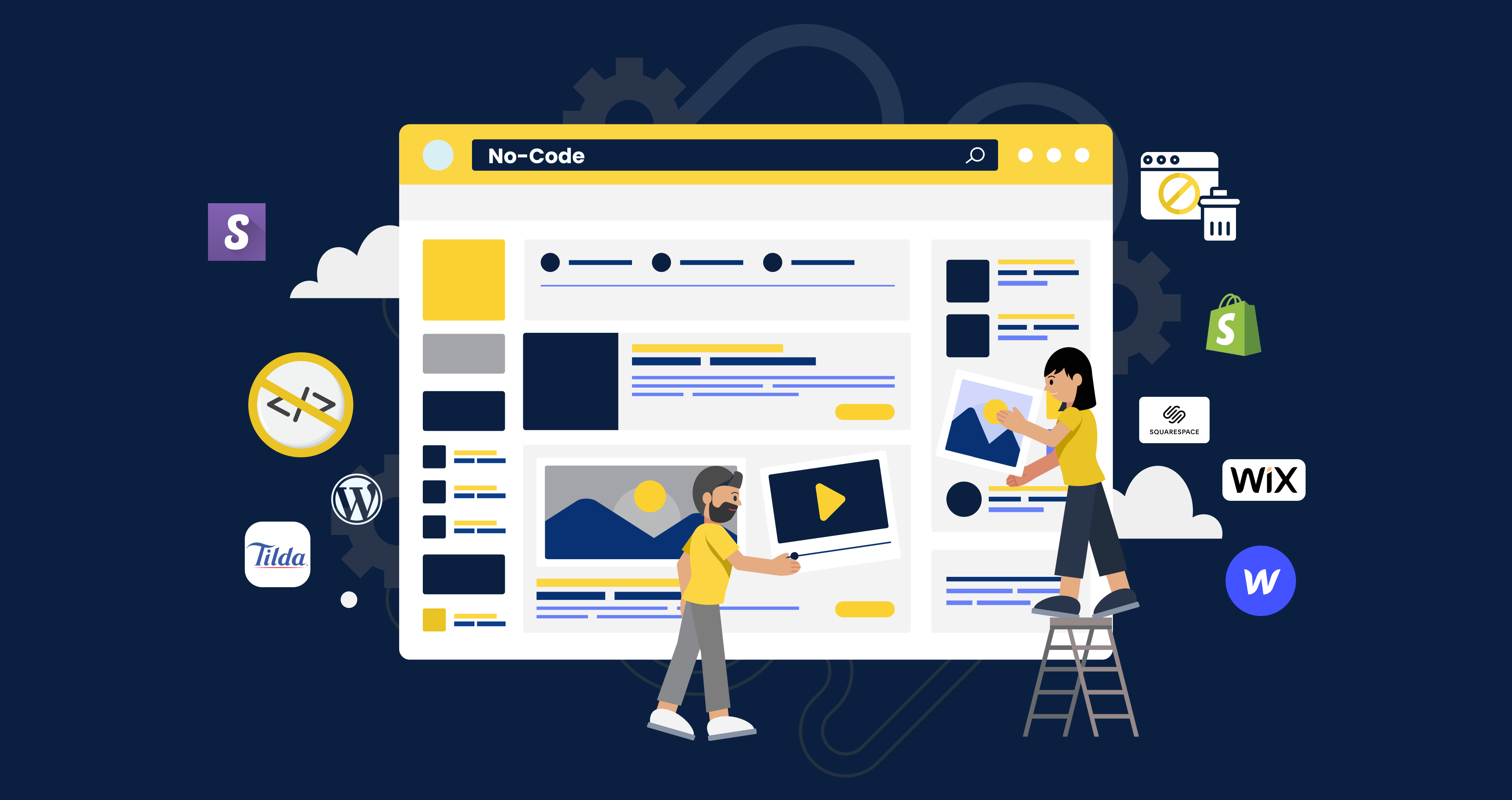
12. Low-Code and No-Code Development Platforms
The democratization of web development continues with low-code and no-code platforms. These tools enable non-developers to create sophisticated websites and applications via intuitive drag-and-drop interfaces.
While not a replacement for custom development, these platforms accelerate prototyping and empower businesses to iterate quickly.
The collaboration between professional developers and citizen developers introduces new workflows and challenges, carving out a significant niche in the evolving web ecosystem—another facet of important web development trends.
13. Real-Time Web Applications
Real-time data has transformed web applications into dynamic hubs of communication and collaboration. Technologies like WebSockets and WebRTC enable instant messaging, live streaming, multiplayer gaming, and collaborative document editing.
This paradigm fosters immediacy and engagement, key expectations in modern user experiences.
Developers must architect infrastructure capable of handling high-frequency updates and synchronization, highlighting real-time capabilities as a critical component of important web development trends.
14. Enhanced Developer Experience (DX)
Behind every cutting-edge web app is a developer empowered by efficient tools, seamless workflows, and clear documentation.
Frameworks and libraries are prioritizing DX, with features like hot module replacement, intuitive APIs, and comprehensive error messages.
Integrated Development Environments (IDEs), containerization (Docker), and automation tools are becoming indispensable, streamlining coding, testing, and deployment processes.
Improved DX accelerates innovation and code quality, echoing through the ecosystem as a vital element of important web development trends.
Navigating the labyrinth of modern web development requires more than just technical prowess; it demands awareness of evolving paradigms that influence how applications are built, delivered, and experienced. The important web development trends outlined here represent not only current realities but also future directions shaping digital experiences.
Embracing these trends enables developers and organizations to craft web solutions that are performant, accessible, secure, and engaging. The web’s evolution is relentless, but with knowledge and adaptability, it becomes a playground of endless opportunity.
Whether it’s the rise of PWAs, the allure of Jamstack, or the potential of Web3, the future of web development is bright, dynamic, and most importantly—meaningful.